The Cadence KitA team way of working with Claude Code, shown on one ticket.
A team buys Claude Code licences. A month later three people use it every day, each in a private way, and nobody can say how the team works with it. This kit takes one real ticket on a small sample service and carries it out three times: step by step, with skills, and with a live architecture view. Every run is recorded: the prompts, the commits, the time and the result, unedited.
🎯The problem
Habits do not transfer. One developer asks for a whole feature in one prompt and reviews 600 lines at the end; another has a careful routine nobody knows. A new colleague asks how the team uses it and gets three answers. Nothing in this is about the model. What is missing is something repeatable that the team owns.
🎬Watch the three cadences, the most capable first
Cadence 3 · With an architecture view
Turn the repository into a platform with Claude Code skills, and watch the architecture and its components change live as each option is drawn on it. 5 prompts, 7 commits, 87 tests pass.
2:33 highlight, captioned · the full run (24:18) → · the steps to follow →
Cadence 2 · With skills
The same steps written down once as skills. One command runs them; a person decides twice: the option, and the commit. 3 prompts, 5 commits, 79 tests pass.
10:52 · screen recording, no narration · the steps to follow →
Cadence 1 · Step by step
One prompt per step, and a person decides between every two prompts: understand, options, decide, tests first, build, review, show, commit. 12 prompts, 10 commits, 90 tests pass.
19:45 · screen recording, no narration · the steps to follow →
🗺️What is inside
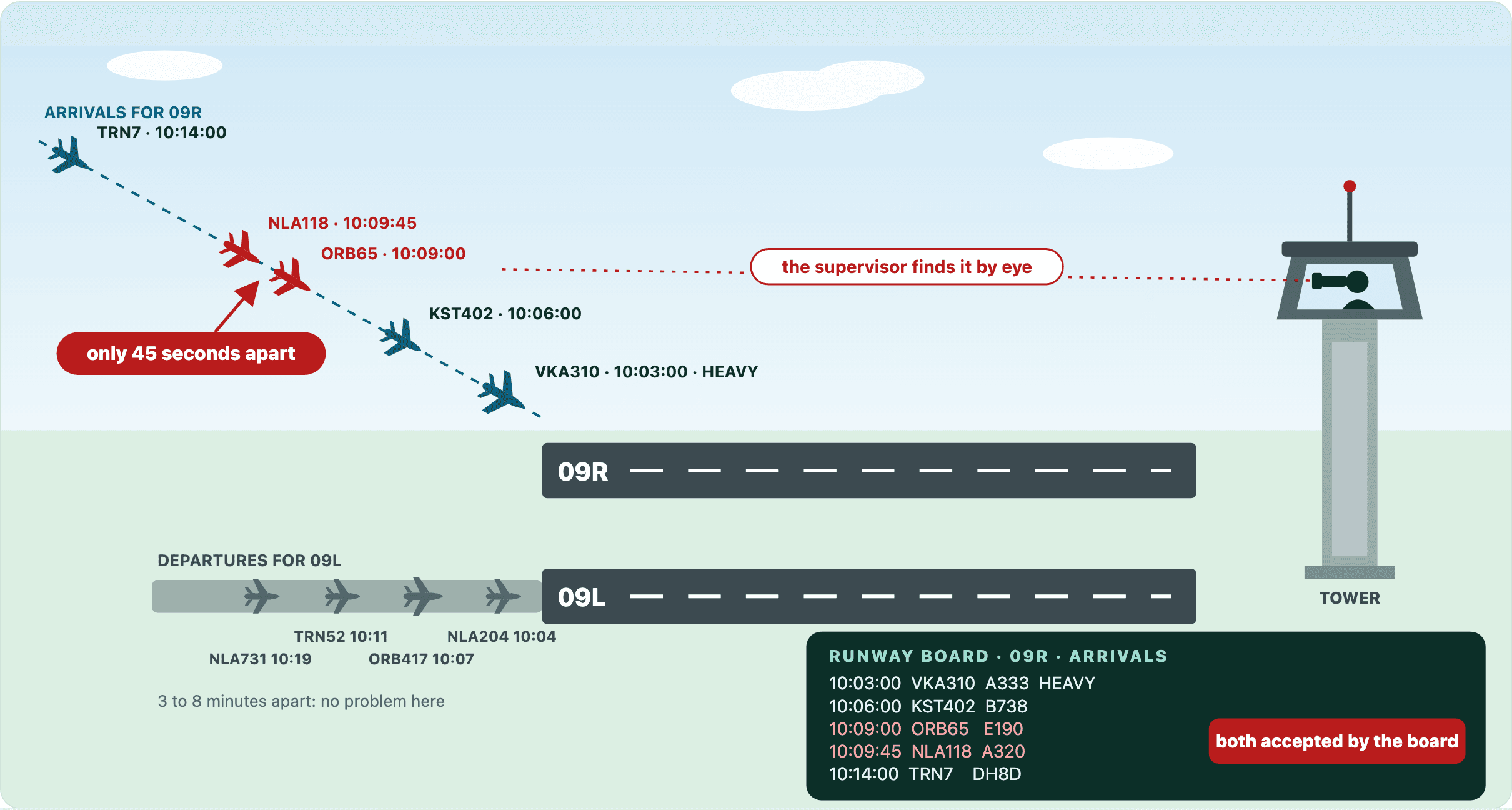
The ticket, in three pictures
What the sample service does, what goes wrong today, the rule the ticket asks for, and how the board refuses and says when.
Three cadences, recorded
Step pages to follow and done pages with the finished result for each cadence, plus the unedited screen recordings.
What the team keeps
A memory file that is true, guard rails that run by themselves, skills for the steps that repeat, and the habit of deciding in two places.
One setup for every operating system
Windows, macOS and Linux on one set of steps: WSL and dev containers, written from the side of the Windows developer.
🖱️How to read it
- Start with the three pictures: the whole ticket fits in them.
- Watch cadence 3 first: it is the most capable way of working. Then go back to see what it is built on.
- Each cadence has a steps page to follow on your own laptop and a done page with the finished result.
- Runway Board is a teaching sample, not air traffic control software. The rules are simplified on purpose.